

U.S. Stablecoin Push Grows, Bitcoin Touted as Reserve Currency, Steak Prices Expose Real Inflation, SEC Chair Backs Self-Custody
News Block #92 (06/16/2025)

Listen to the latest episode of the News Block below.👇
U.S. Stablecoin Momentum Heats Up
This past week, I was in New York City for the Coinbase State of Crypto Summit, and I wanted to share some noteworthy announcements from the speakers. A huge topic at the summit was STABLECOINS!
Shopify CEO Tobi Lütke announced that his $142 billion e-commerce company is partnering with Coinbase and Stripe to enable stablecoin payments for its 5.5 million merchants worldwide.
This news came just weeks after Block revealed that it will soon enable Bitcoin payments on its Square platform, which already serves over 4 million merchants.
And let’s not forget—Speed Wallet recently partnered with Steak n’ Shake to bring Lightning payments to all of their stores nationwide. According to Steak n Shake’s COO, Bitcoin has been a “win” for the business and its customers, noting that Lightning payments are faster and cheaper than credit card transactions.
On top of that, the Wall Street Journal broke a story that both Walmart and Amazon are exploring how to integrate stablecoins into their operations. Reports even suggest they’re considering issuing their own.
Why? Like the COO of Steak n’ Shake noted, stablecoins also offer a way to bypass expensive legacy payment rails that cost companies billions in fees and take days to settle.
If Amazon and Walmart move forward with issuing stablecoins, it would be a massive development. Millions of people would suddenly be downloading wallets and using stablecoins in everyday life, normalizing digital money at scale. To me, that would be a stepping stone toward greater Bitcoin adoption over the long run.
These headlines paint a very clear picture: Bitcoin and stablecoin adoption are accelerating across fintech, e-commerce, and even food service.
The momentum isn’t just in the private sector either.
Another big moment at the Summit? A special message from President Trump himself. For the second time since taking office, he addressed the industry directly with a prerecorded message saying,
“My administration is working with Congress to pass the GENIUS Act supporting the creation of dollar-backed stablecoins. And we also will be working to create clear and simple market frameworks that will allow America to dominate the future of crypto and Bitcoin.”
After years of regulatory hostility, it’s refreshing to see political leadership actively supporting this industry.
Treasury Secretary Scott Bessent said he believes the U.S. stablecoin market could exceed $2 trillion by 2028, up from about $250 billion today. That’s more than an 8x in growth in just a few years.
This is likely one reason Congress is moving quickly. Last Wednesday, the Senate voted to advance the GENIUS Act, a bill that would regulate stablecoins by requiring them to be fully backed by U.S. dollars or equivalents like Treasuries and subjecting issuers to annual audits.
So what’s the next step? A final Senate vote is scheduled for this Tuesday, and if it passes, the bill will move on to the House.
So, while there’s still some distance before anything lands on the President’s desk, the momentum is undeniable. President Trump says he wants a stablecoin bill signed by August. We’ll see if Congress can deliver.
Either way, one thing is clear: the groundwork is being laid for an explosion in merchant adoption of stablecoins. And what we’re seeing now, with Shopify, Square, Stripe, and potentially Amazon and Walmart getting onboard…it really feels like just the beginning.
The News Block is powered exclusively by Gemini.
Investing in Bitcoin has never been easier with the Bitcoin Credit Card from Gemini. Earn bitcoin or 50+ cryptos back on every purchase with no annual fee.

Sign up today for a $200 bitcoin bonus and claim your limited edition Bitcoin Credit Card - your passport to financial freedom. Go to gemini.com/natalie for more details.
Steak Prices Expose Real Rate of Inflation
So—yes, stablecoins are all the rage right now, and they’re definitely useful for payments, but let’s be honest… they’re still just U.S. dollars wrapped in a shiny new wrapper with a few more bells and whistles.
They still come with the same risks as holding cash: inflation and currency debasement. And as our government continues to run multi-trillion-dollar deficits year after year, that risk is only growing.
One of my favorite moments from the Coinbase event came from Coinbase CEO Brian Armstrong himself. Take a listen.👇
Wow. You heard him—Bitcoin could become the new global reserve currency. But what stood out was his framing of Bitcoin as a check on reckless government spending.
Analysts like Luke Gromen have called Bitcoin the “last functioning smoke alarm.” Others have described it as a mirror that reflects the debasement of fiat currencies in real time.
That gets to a key point I want everyone listening to understand: When governments are buried in debt like this, their options are very limited.
They can:
1.) Try to grow their way out of it (which looks increasingly unlikely),
2.) Cut spending (yeah… that’s not happening),
3.) Default on their debt. That would be catastrophic for the global economy, given that the U.S. is the global reserve currency issuer. Or…
4.) They can try to inflate the debt away by debasing the currency.
That last option? It’s historically the most convenient and politically palatable for governments to pursue. And it’s the one gold bugs and Bitcoiners have long warned about.
So, how do you protect yourself?
Well, billionaire Paul Tudor Jones was asked that exact question on Bloomberg this week—and here’s what he said:
There you have it. His go-to assets in this inflationary environment? Gold, Bitcoin, and stocks.
And that government playbook to inflate away the debt he’s talking about? It’s not theoretical. It’s playing out right now.
Sure, official CPI numbers say inflation is “just” over 2%. But we all know it feels much higher. And that’s the problem: inflation is hard to measure, which is precisely why it’s such a powerful tool for the government to tax the entire population secretly.
But leave it to Bitcoiners to put in the work and track the real story here.
Zaprite’s Parker Lewis recently posted a viral tweet that he’s been tracking the price of the same steak at the same store for five years. And get this…
That steak's price has risen from $19.99 per pound in 2020 to $32.49 today, an average annual inflation rate of 12%!
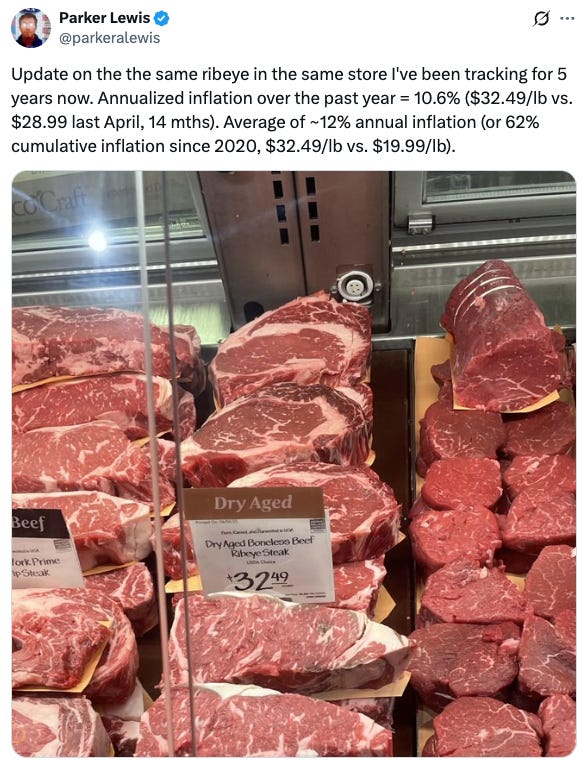
The steak has not changed. But the dollar’s purchasing power sure has.
And here’s the kicker: If you’d held Bitcoin instead of dollars over that same period, your purchasing power would have increased. You could buy more steak today, not less.
That’s the power of measuring your life in sats—and seeing Bitcoin as your unit of account.
And now, thanks to the folks at TFTC, that mindset shift just got a lot easier.
They just launched a new browser extension called Opportunity Cost, which automatically converts fiat prices into Bitcoin across all websites, from Amazon to Airbnb.
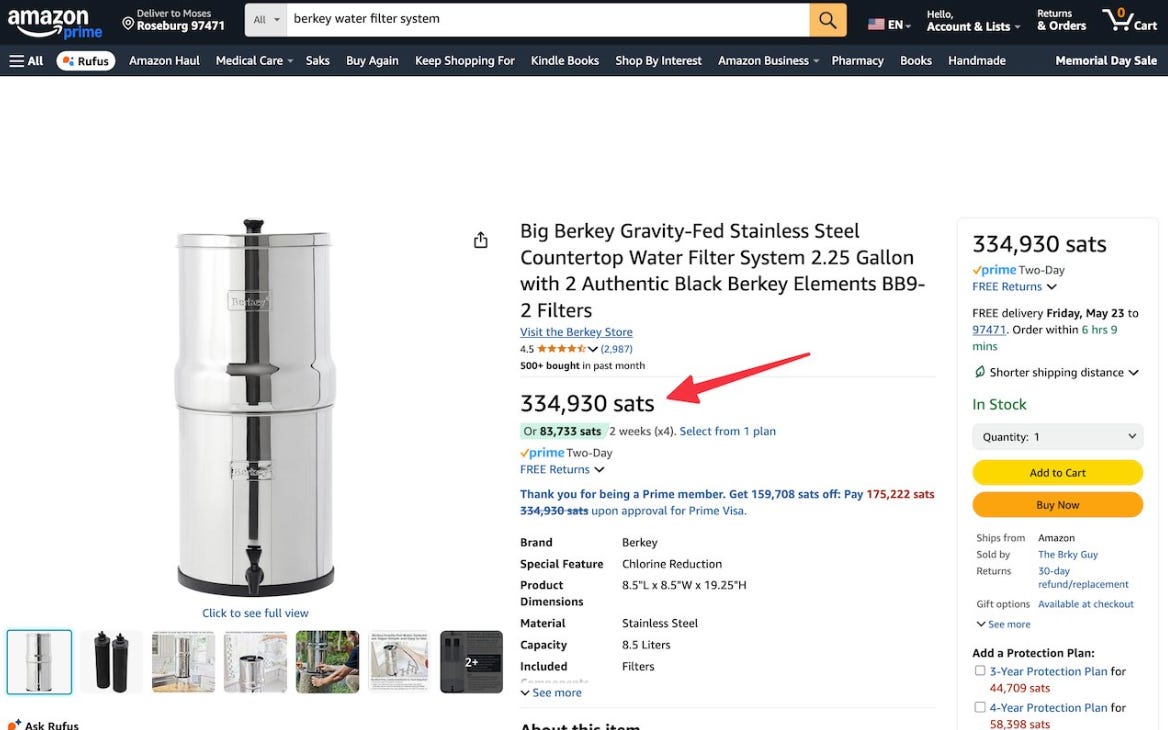
So now, as Bitcoiners, you can literally see how much cheaper life is getting in real time as Bitcoin’s purchasing power grows.
Why’d they build it? TFTC said: “We live in a fiat world, but the future is Bitcoin. This tool helps you build Bitcoin intuition by training your mind to measure value in sound money, not debased currency.”
I know I’ll be using it, and I recommend everyone try it, too. Once you start viewing the world through a Bitcoin lens, everything changes.
And honestly? Using Bitcoin as my unit of account has been one of the best life hacks I’ve ever discovered.
SEC Chairman Voices Support for Self-Custody
Let’s go back to something Paul Tudor Jones said at the end of his interview, because I think it’s incredibly important…
He said, “Inflation works until the population throws you out because you let inflation get too hot.”
He’s saying that currency debasement only works for governments until it doesn’t. It works until the people lose faith in the currency and flee to alternatives.
That’s the breaking point. Brian Armstrong delivered the same message at the Coinbase event.
But here’s the question we all have to ask: If inflation runs hot… and people start moving more aggressively into Bitcoin, will the government allow it?
Because historically, when people flee a failing currency, governments don’t always welcome it. They often resort to capital controls—restricting money movement, banning alternatives, and tightening their grip on the system.
We’ve seen this play out in country after country during inflationary episodes.
But here’s the encouraging part: right now, U.S. regulators' tone is surprisingly supportive, especially regarding self-custody.
Just recently, new SEC Chairman Paul Atkins called the right to self-custody a foundational American value. Check it out: 👇
This is incredibly encouraging to hear. Because as the government continues to debase, the ability to self-custody your bitcoin becomes more critical than ever.
It’s not just about protecting your wealth but also about defending yourself against censorship and seizure. And that’s where Bitcoin stands apart.
Unlike any other asset, Bitcoin lets you own your wealth in a truly sovereign way.
So if inflation does heat up, and if trust in traditional money begins to erode, it’s going to become increasingly important for people to understand this core truth:
Self-custody isn’t just a feature of Bitcoin. It’s kind of the whole point.
Bank of America Touts Bitcoin as Once-in-a-Millennium Technology
To wrap up this News Block, here are a few stories that caught my eye this week:
First, Bank of America published a chart titled “1,000 Years of Technological Disruption.” Bitcoin was on the same tier as the printing press, the steam engine, the light bulb, and the Internet.
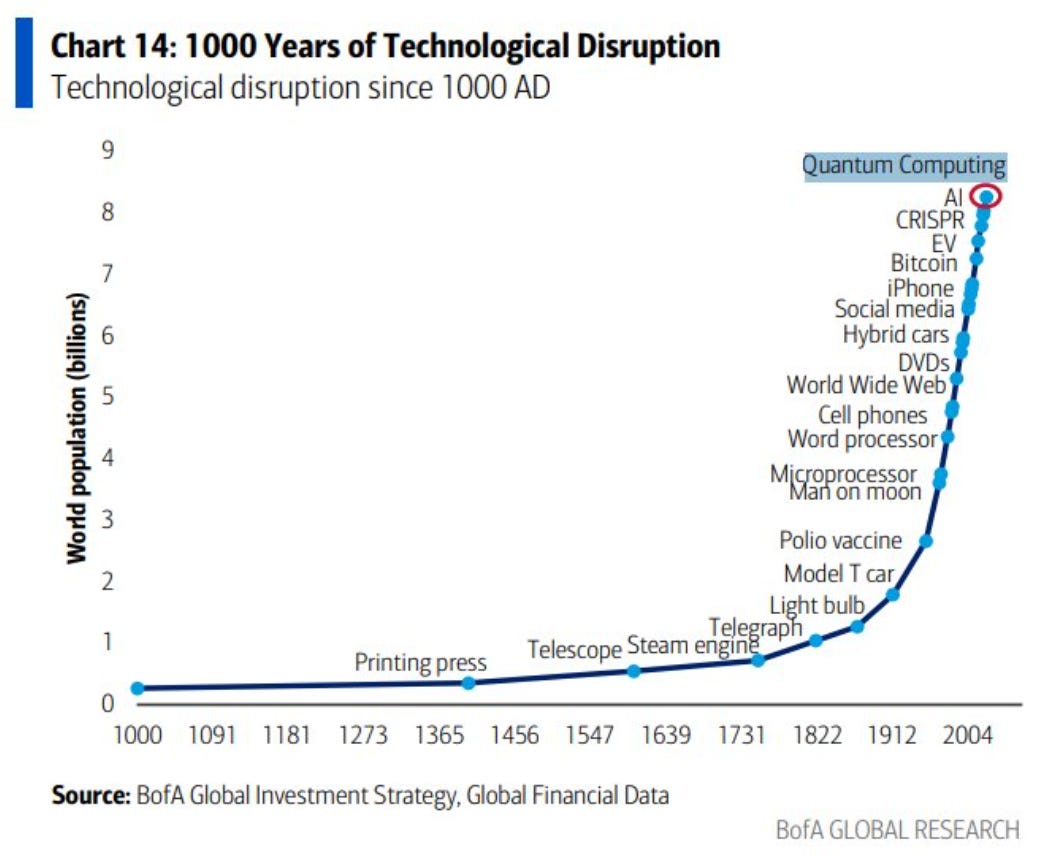
Not stablecoins. Not “crypto.” Bitcoin.
What’s wild to me is that this bank can acknowledge Bitcoin as a once-in-a-generation disruptive technology and yet still not build around it in any meaningful way. But hey…I guess, as the saying goes, “We all get Bitcoin at the price we deserve.”
Next, an important milestone that quietly flew under the radar this week was Bitcoin's just-mining of its 900,000th block.

It reminded me of that early quote from Bitcoin pioneer Hal Finney, who once said:
“Every day that goes by and Bitcoin hasn't collapsed due to legal or technical problems brings new information to the market. It increases the chance of Bitcoin's eventual success and justifies a higher price.”
Hal really was way ahead of his time—and that quote hits even harder today.
Now let’s talk corporate adoption, because it just keeps accelerating.
Strategy remained active this week, purchasing an additional 10,100 Bitcoin.
That brings its total holdings to 592,100 Bitcoin, 542,725 more than the next largest public company holding Bitcoin.
Once again, this latest raise was funded entirely by its perpetual preferred share offerings, Stride, Strife, and Strike.
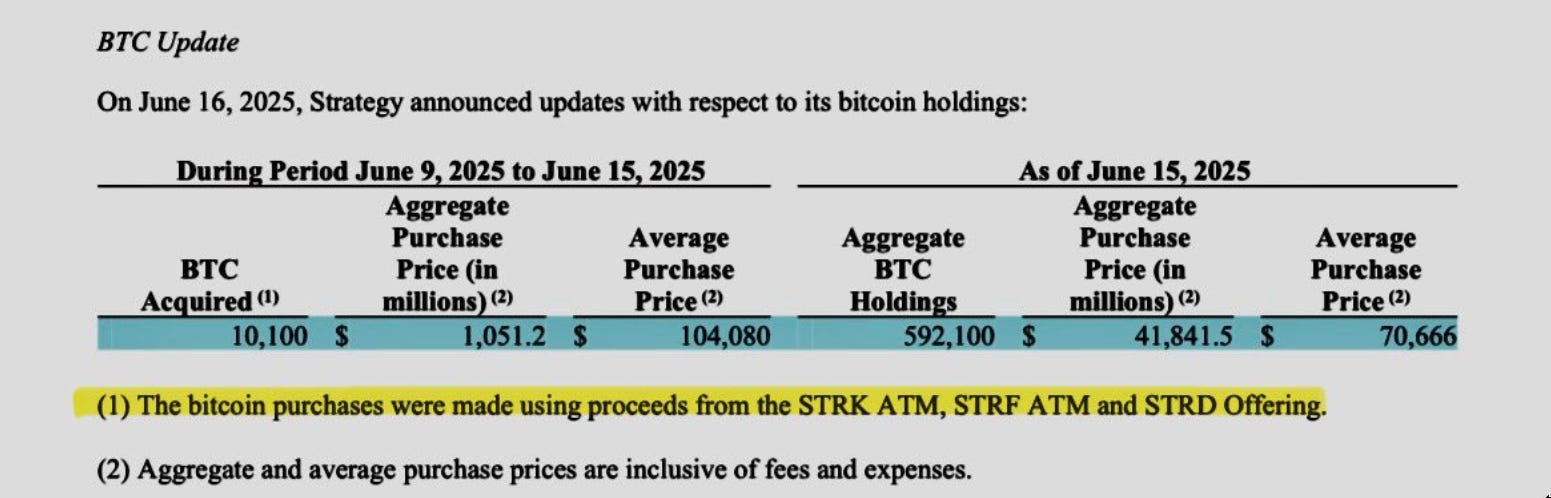
In other words…no dilution for common shareholders.
Meanwhile, Metaplanet continues to stack sats at an impressive rate. It announced a new $210 million raise of 0% ordinary bonds and acquired another 1,112 Bitcoin. With this latest purchase, it hit a milestone, crossing 10,000 Bitcoin.
A tiny Japanese hotel company has now accumulated more bitcoin in the last year than Coinbase has in the last 13 years. Crazy.
I sat down with Metaplanet’s Dylan LeClair while in New York, so make sure you tune in to learn more about Metaplanet’s Bitcoin strategy.
And finally, the SEC has officially cleared Trump Media to purchase up to $2.3 billion worth of Bitcoin with funds it recently raised.
We don’t yet know how much they’ll acquire, but the filing also includes a $12 billion shelf, giving them flexibility to buy even more.
So let’s take a step back.
Each week, we’re seeing more companies embrace Bitcoin. But now we’re watching a sitting President’s company potentially become one of the largest corporate hodlers in the world.
President Trump told the crowd at Bitcoin 2024 in Nashville that “we’re going to win so much, we’ll get tired of winning.”
But I’ve got to be honest—I’m not getting tired of all this winning…not one bit.
Until next week, keep stacking.
- Nat
If you enjoyed reading this post, you should consider subscribing to the News Block.
NEW: "Plan B" Passports Explained: How to Safeguard Your Future with Second Citizenship w/ Katie Ananina
In this episode, Natalie Brunell chats with Katie Ananina aka "Katie the Russian" on X—CMO of CitizenX and founder of Plan B Passport—about her move from post-Soviet Russia to launching businesses in the U.S. What you’ll learn:
Katie’s entrepreneurial roots in Russia after the USSR’s collapse
How “Plan B Passports” gives you a backup plan when borders change
Why second-citizenship by investment is becoming more popular
The basics of "flag theory" and why diversifying your citizenship matters
Key geopolitical trends to watch before picking a passport
Broken immigration systems and the rise of microstates
The future of flexible citizenship models
Make sure to listen to my latest Coin Stories episodes, including Katie Ananina, Saifedean Ammous, and Judy Shelton.

Listen on Fountain and Earn Bitcoin: Click here
Listen on Apple Podcasts: Click here
Listen on Spotify: Click here
Listen on YouTube: Click here
Links to Items Mentioned in this Issue:
Semler Scientific Announces New Bitcoin Buy
Block to Launch Bitcoin Payments on Square
Shopify to Launch Stablecoin Payments with Coinbase
Steak n’ Shake COO Comments on Bitcoin Success
President Trump Addresses Coinbase Summit
Bessent Predicts Stablecoin Market Cap to Exceed $2 Trillion
Amazon & Walmart Considering Stablecoin Implementations
Senate Votes to Move Forward with the GENIUS Act
Senate to Hold Final Vote on GENIUS Act on Tuesday
Parker Lewis’s Tweet on Local Steak Inflation
TFTC Launches Bitcoin Web Browser Extension
Bank of America Chart on Disruptive Technologies
Bitcoin Network Successfully Mines 900,000th Block
SEC Clears Trump Media to Buy Bitcoin for Treasury
Brian Armstrong: Bitcoin Could be Reserve Currency
SEC Chair’s Comments on Right to Self-Custody BTC
Paul Tudor Jones’ Interview on Bloomberg